
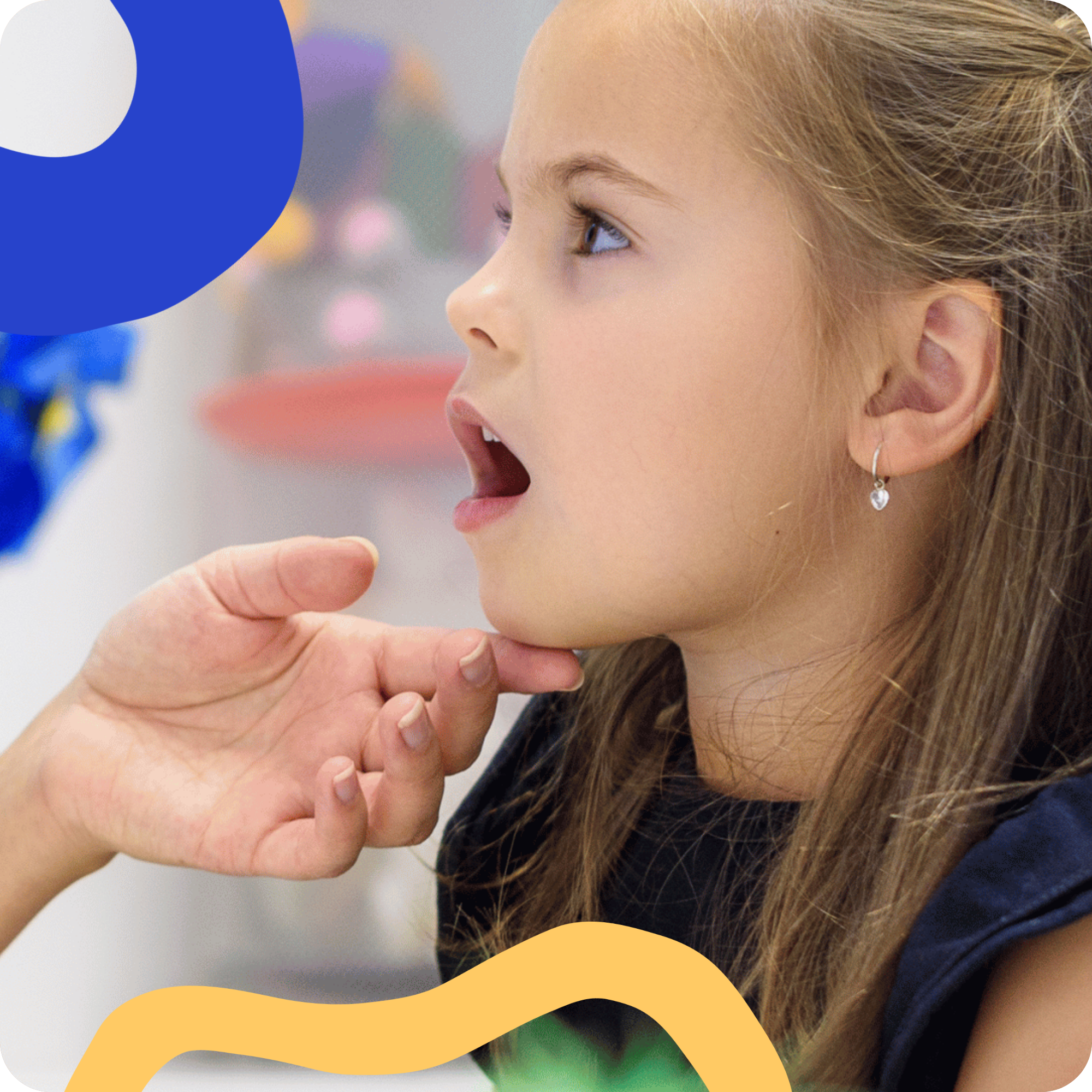
Childhood apraxia of speech (CAS) is a motor speech disorder in which the child knows what they want to say, but their brain has trouble coordinating the precise, rapid movements needed to say it. It requires a different kind of therapy than a typical articulation delay. Saltwater Speech offers PROMPT, one of the most well-researched hands-on approaches for treating it.
PROMPT Apraxia Therapy in Manhattan & Brooklyn
What Is PROMPT?
PROMPT (Prompts for Restructuring Oral Muscular Phonetic Targets) is a tactile-kinesthetic approach: the therapist uses precise touch cues on the child's face and jaw to guide the muscle movements needed for specific sounds and words, while the child simultaneously works on the communication itself.
It has been researched in its use in promoting coordinated speech movements with children who have Childhood Apraxia of Speech. Researchers have recently begun exploring outcomes with children on the autism spectrum as well.
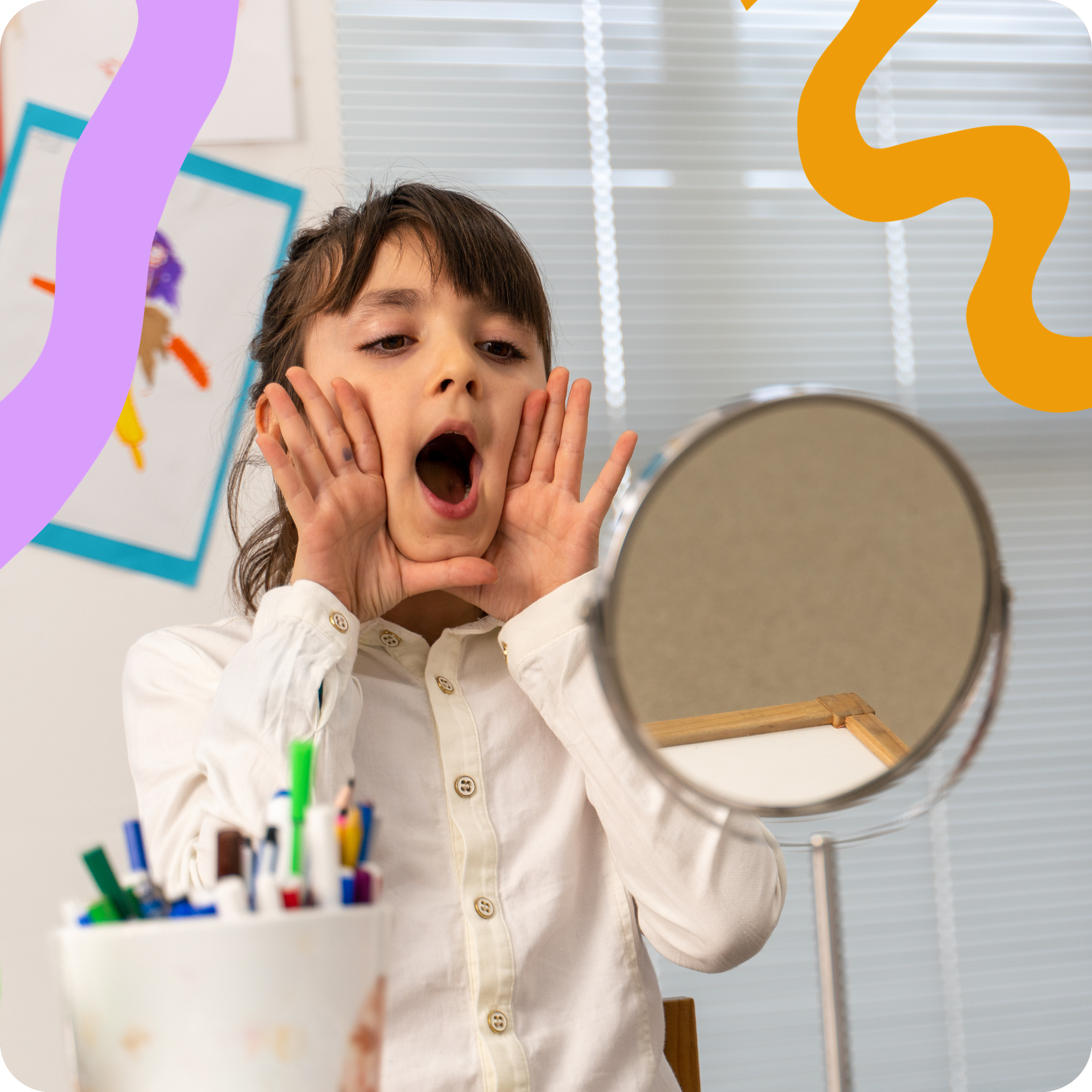
Signs Your Child May Benefit From PROMPT:
Your child has:
Speech that is inconsistent. The same word sounds different each time it's attempted
Groping or visible effort searching for the right mouth position
Speech that gets harder, not easier, as words or phrases get longer
Slow progress with traditional articulation therapy
A diagnosis of, or suspected, childhood apraxia of speech from an evaluation
Why Choose Saltwater Speech?
Apraxia doesn't respond to therapy the way a typical articulation delay does! Practicing sounds in isolation often isn't enough, and it takes a clinician trained specifically in a motor-based method to make real progress. Nicole is PROMPT-trained, equipped to work directly at the motor-planning root of apraxia, not just its symptoms.
Nicole’s clinical training is paired with research experience: at UCLA, she contributed to a study exploring outcomes of PROMPT used in combination with JASPER, giving her firsthand insight into how two evidence-based approaches can complement each other for children who need specialized support.
Because PROMPT is hands-on and precise, our sessions are built around consistency and clear, trackable goals. Progress with apraxia tends to be gradual, so we will keep you closely looped in after every visit so you know exactly what's being targeted and how to reinforce it. That combination of technical precision and genuine, ongoing communication with families is very central to how we practice.
Frequently Asked Questions
Apraxia has some specific hallmarks, like inconsistent errors on the same word and increasing difficulty with longer words, that a qualified SLP can assess. If you suspect apraxia, a formal evaluation is the right first step.
How do I know if my child has apraxia or just a speech delay?
1
Timelines vary significantly by child and severity, but apraxia generally responds best to frequent, consistent sessions rather than occasional practice. We can outline a realistic plan after an evaluation.
How long does apraxia therapy typically take?
2
It's a brief, precise touch to the jaw, lips, or face that guides the correct muscle movement for a sound, used alongside verbal practice.
3
What is a PROMPT touch cue?
Sessions are currently held in-home and in-clinic on the Upper East Side, as well as across Brownstone Brooklyn: Boerum Hill, Brooklyn Heights, Carroll Gardens, Cobble Hill, DUMBO, Fort Greene, and Park Slope.
Get in touch to discuss speech therapy for your child or to set up an evaluation.