
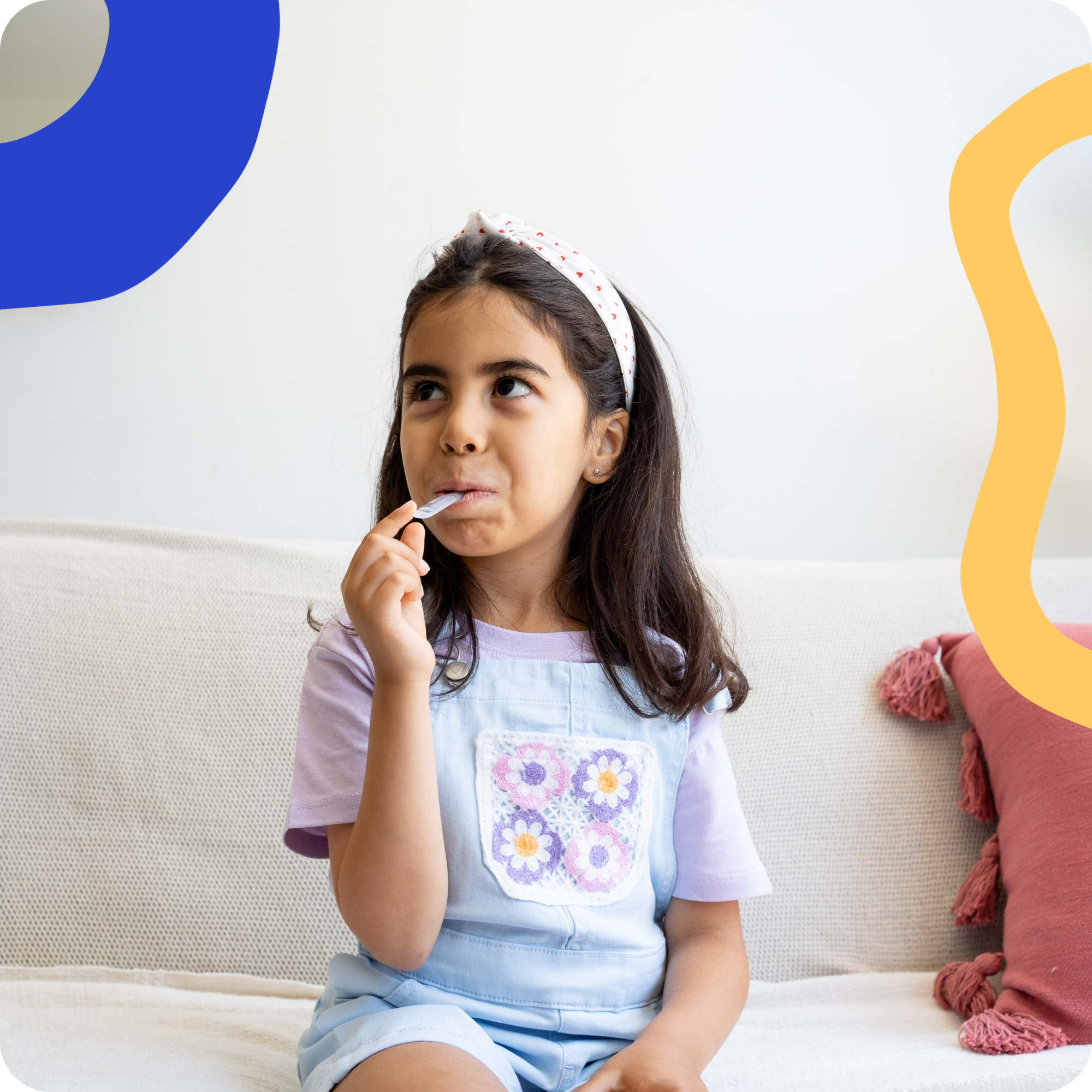
Orofacial myofunctional disorders, patterns like tongue thrust, chronic mouth breathing, or lingering oral habits, can affect speech clarity, swallowing, dental alignment, and even sleep. Saltwater Speech offers myofunctional therapy for children working to retrain these oral muscle patterns into healthier, more functional habits.
Myofunctional Therapy in Manhattan & Brooklyn
What Oral Myofunctional Therapy Addresses
Tongue thrust: The tongue pushing forward against or between the teeth during speech or swallowing, which can affect articulation and dental alignment
Post-tongue-tie release therapy: Helping a child build proper tongue mobility and function after a frenectomy, so the release translates into real functional improvement
Oral habits: Thumb-sucking, prolonged pacifier use, or nail-biting that affect oral development
Mouth breathing and low tongue posture: Patterns that can influence facial growth, sleep quality, and speech
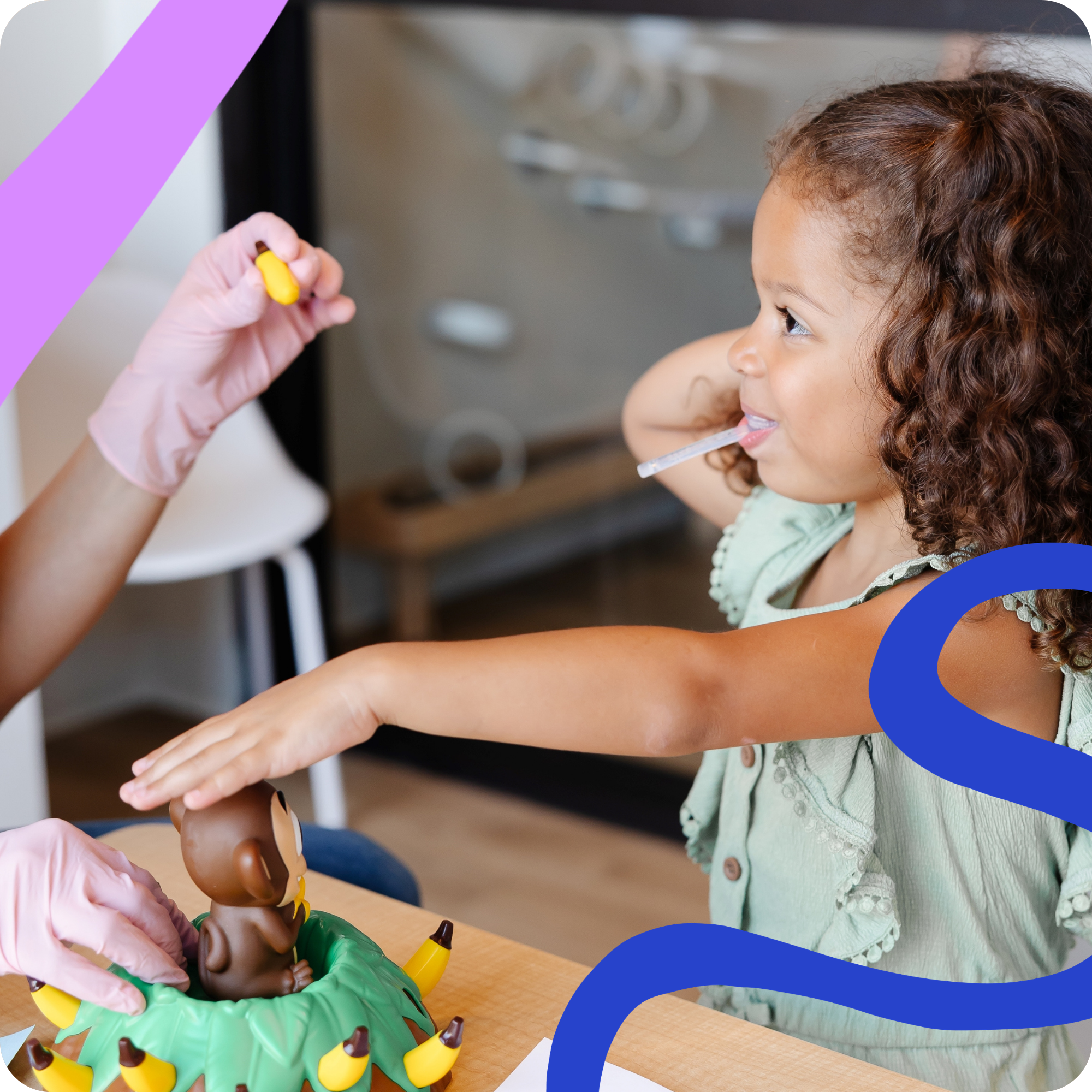
Signs Your Child May Benefit From Myofunctional Therapy:
You child has had a tongue tie release, or your child had a tongue-tie release and hasn't had the functional changes you expected
Your child has a lisp connected to tongue placement
Your child breathes through their mouth more than their nose
Your child has issues with thumb sucking, drooling, or moving on from using a pacifier
Your child has another persistent oral habit their dentist or pediatrician has flagged
Why Should a Child Do Myofunctional Therapy?
Left unaddressed, myofunctional patterns don't tend to resolve on their own, and can undercut the results of orthodontic work, tongue-tie releases, or speech therapy for certain sound errors. Catching and treating these patterns early, with a clinician who understands the full picture, can mean a shorter, more effective path forward on all of those fronts.
We approach myofunctional therapy from a speech-language pathology lens first. We assess the muscle patterns in the context of your child's whole communication and feeding profile, versus treating them in isolation. Nicole has pursued dedicated training in orofacial myofunctional therapy as part of her ongoing clinical education, and she builds each plan around targeted exercises for tongue and lip strength, resting posture, and swallowing patterns, all which are practiced in session and reinforced with a focused home program between visits.
Frequently Asked Questions
A frenectomy releases the physical restriction, but the tongue often needs guided retraining to use its new range of motion correctly. Myofunctional therapy helps that release actually translate into better function.
My child just had a tongue-tie release, why do they need therapy too?
1
Some speech sound errors, particularly certain lisps, are tied to tongue posture and movement patterns that myofunctional therapy directly addresses, often in combination with traditional articulation therapy.
Can myofunctional therapy fix a lisp?
2
Myofunctional therapy is most effective as part of a coordinated care plan, and we are glad to communicate with your child's other providers as needed.
Do you work with dentists or ENTs?
3
Sessions are currently held in-home and in-clinic on the Upper East Side, as well as across Brownstone Brooklyn: Boerum Hill, Brooklyn Heights, Carroll Gardens, Cobble Hill, DUMBO, Fort Greene, and Park Slope.
Get in touch to discuss speech therapy for your child or to set up an evaluation.